A fun way to encourage participant feedback…
18 Wednesday Jul 2012
Posted in EMERGENCY MANAGEMENT

18 Wednesday Jul 2012
Posted in EMERGENCY MANAGEMENT
07 Saturday Jul 2012
Posted in EMERGENCY MANAGEMENT
An Excerpt from the July 2012 Bulletin of the
International Association of Emergency Managers (IAEM)

Here’s a plain text version as well:
Everything you wanted to know about CMAS but were afraid to ask…
By Matt May and Todd Jasper
The Good
Commercial Mobile Altering System (CMAS) has been 10 years in development as an additional key part of the emergency alerting and warning system that already includes Emergency Alerting System, weather radio, phone notification systems, and outdoor warning sirens. The concept behind CMAS is that in an emergency, a 90-character text message can be sent at no cost to all cellphones connected to a pre-defined number of cellphone towers. Since many households have now chosen to use cellphones rather than a landline phone, CMAS fills the gap by sending geographically-specific messages to all mobile phones in a region.
As noted in the Bulletin article from May 2012, local and state jurisdictions can use the system as an additional element of their local warning systems. It can be particularly helpful in reaching the general public quickly–including those with no hardwired phone or when outdoors.
The Bad
Since CMAS requires jurisdictions to use an IPAWS integrator, the use of CMAS will vary by jurisdiction. The investment in a system, such as online software that is compliant with the Common Alerting Protocol (CAP) standard, can be substantial. There are standalone systems as well as several of the popular crisis management tools that integrate a CMAS/IPAWS initiator into their systems–but all at a cost.
Two unique issues are the very short message length coupled with the very broad reach–including recipients who are not local residents. Emergency managers and PIOs are likely to find it challenging to condense emergency guidance down to the 90-character (not words) limitation without redacting critical elements of the warning. It will take practice to draft CMAS messages. To improve efficacy, emergency managers and PIOs should consider employing pre-scripted messages in order to deliver the best message effectively in 90 characters.
Additionally, state and local EAS and notification plans will require a significant rewrite to address the use of CMAS.
The Ugly
Unfortunately, there is no national public education campaign to inform the public about CMAS messages and what to expect. Since currently less than 10% of cell phone devices are able to receive CMAS messages, there is likely to be some confusion when a CMAS message is sent but only a few phones in a room receive the message.
In the Kansas City region, the regional EM committee and the regional PIO committee have developed a press release and flyer that can be used to educate the public. The press releases can be found at http://www.preparemetrokc.org/wea.asp.
Due to the location of cell phone towers, it is likely that warnings will be received by unintended cellphones based on geography and warning type–which might prompt public frustration with CMAS. Since it is possible for the public to opt out of receiving CMAS messages, it is incumbent upon local emergency managers and regional outreach efforts to encourage CMAS participation. Through the use of outreach, the public needs to be made to understand the benefits of CMAS and that the system will be refined over time to increase the accuracy of the reach of messaging.
Moving forward:
While there are implementation issues with any emerging technology, the CMAS program is a welcome addition to the emergency management and public warning field. With a good public education campaign and by encouraging local emergency managers to develop emergency notification protocols with pre-scripted messages, CMAS will no doubt become a trusted tool.
06 Friday Jul 2012
Posted in EMERGENCY MANAGEMENT
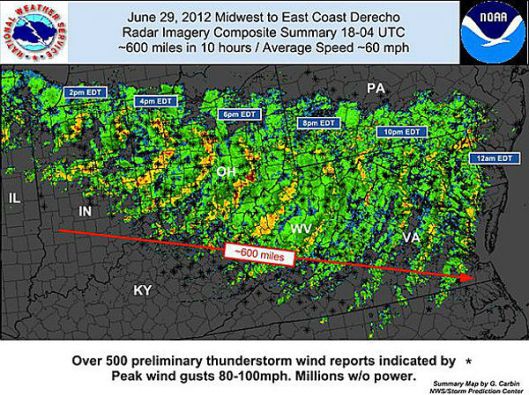
Every month I have an emergency preparedness article in the local newspaper (ChevyChase.Patch.com). Here’s the link to my July article. I’ve also copied it below:

As Chevy Chase Patch reported this week, “…the place to be in Chevy Chase during the derecho was the Village of Friendship Heights…all of the village’s power lines are under those streets, and village residences remained powered-up and air-conditioned throughout the derecho aftermath.”
Many will be surprised to discover that Friendship Heights, which is almost entirely occupied by high-rise residential buildings, “has the highest population density of any census designated place in the United States”. In a demographic report from Montgomery County from 1995, the County noted that in Friendship Heights:
Recognizing that we have a disproportionately large number of senior citizens in Friendship Heights means that we need to be specially prepared for emergencies–such as utility failure.
Friendship Heights can learn from past disasters. In 1995, Chicago experienced a terrible heatwave accompanied by utility failure. The result was an estimated 750 deaths in a period of five days. The majority of those that died during the Chicago heatwave were persons over the age of 65. Afterwards, the major vulnerabilities were identified as being:
Without a doubt, those vulnerabilities are present in Friendship Heights. While Friendship Heights was very lucky to have power throughout the derecho and its aftermath, if power had failed and residents were stuck in high-rise buildings without being able to use the elevators, air conditioners, or even phones–the outcome could have been significantly worse.
My recommendation is that each high-rise building in Friendship Heights must have an annexed emergency operations plan with incident-specific plans and checklists for hazards such as utlity failure, hyperthermia, earthquakes, telecommunications failures and other recent hazards that the Village has experienced. The plans should be submitted to the Village Council for review annually and should include the opportunity for feedback from residents and County officials (such as Montgomery County Fire and Rescue Service, Montgomery County Office of Emergency Management and Homeland Security, Montgomery County Office of Aging and Disabilities).
The Village of Friendship Heights ought to consider creating a Public Safety and Emergency Preparedness Committee. The committee could examine regional plans and advocate for the Village in County emergency preparedness planning efforts. The Village has too much at risk to not be vocal and active in preparing for emergencies.
While the Village recently dodged the “derecho bullet”, let’s not be lulled into complacency. The derecho should be a wake-up call for all residents in Chevy Chase to re-examine our emergency preparedness and work together as a community to avoid that 1995 Chicago heatwave tragedy.
Todd Jasper is a federal emergency manager and has been happy to call Chevy Chase home since 2008. His emergency management blog is www.toddjasper.com.
21 Thursday Jun 2012
Posted in EMERGENCY MANAGEMENT
An Excerpt from the June 2012 Bulletin of the
International Association of Emergency Managers (IAEM)
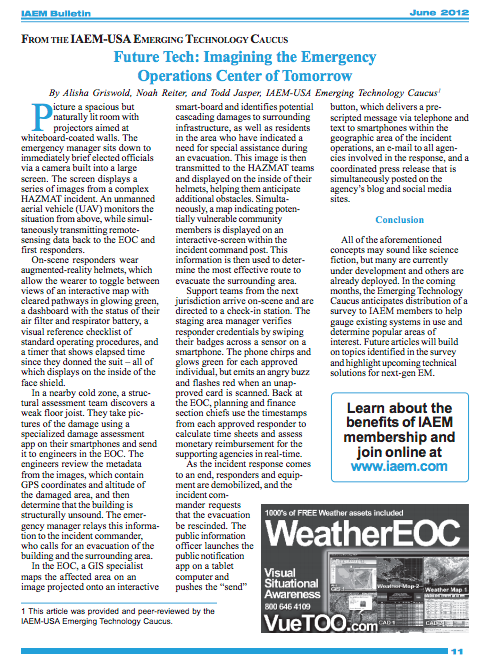
Here’s a plain text version as well:
By Alisha Griswold, Noah Reiter, and Todd Jasper, IAEM-USA Emerging Technology Caucus
Picture a spacious but naturally lit room with projectors aimed at whiteboard-coated walls. The Emergency Manager sits down to immediately brief elected officials via a camera built into a large screen. The screen displays a series of images from a complex HAZMAT incident. An unmanned aerial vehicle (UAV) monitors the situation from above while simultaneously transmitting remote-sensing data back to the EOC and first responders.
On-scene responders wear augmented-reality helmets, which allow the wearer to toggle between views of an interactive map with cleared pathways in glowing green, a dashboard with the status of their air filter and respirator battery, a visual reference checklist of standard operating procedures and a timer that shows elapsed time since they donned the suit, all of which displays on the inside of the face shield
In a nearby cold zone, a structural assessment team discovers a weak floor joist; they take pictures of the damage using a specialized damage assessment app on their smartphones and send it to engineers in the EOC. The engineers review the metadata from the images, which contains GPS coordinates and altitude of the damaged area, and then determine that the building is structurally unsound. The Emergency Manager relays this information to the Incident Commander, who calls for an evacuation of the building and the surrounding area.
In the EOC, a GIS specialist maps the affected area on an image projected onto an interactive smart-board and identifies potential cascading damages to surrounding infrastructure, as well as residents in the area who have indicated a need for special assistance during an evacuation. This image is then transmitted to the HAZMAT teams and displayed on the inside of their helmets, helping them anticipate additional obstacles. Simultaneously, a map indicating potentially vulnerable community members is displayed on an interactive-screen within the Incident Command Post, which is then used to determine the most effective route to evacuate the surrounding area.
Support teams from the next jurisdiction arrive on-scene and are directed to a check-in station. The Staging Area Manager verifies responder credentials by swiping their badges across a sensor on a smartphone. The phone chirps and glows green for each approved individual but emits an angry buzz and flashes red when an unapproved card is scanned. Back at the EOC, Planning and Finance Section Chiefs use the timestamps from each approved responder to calculate time sheets and assess monetary reimbursement for the supporting agencies in real-time.
As the incident response comes to an end, responders and equipment are demobilized and the Incident Commander requests that the evacuation be rescinded. The Public Information Officer launches the public notification app on a tablet computer and pushes the “send” button, which delivers a pre-scripted message via telephone and text to smartphones within the geographic area of the incident operations, an e-mail to all agencies involved in the response, as well as a coordinated press release that is simultaneously posted on the agency’s blog and social media sites.
Conclusion
All of the aforementioned technologies may sound like fantasy, but many are currently under development and others are already deployed. In the coming months, the Emerging Technology Caucus anticipates distributing a survey to all emergency management agencies to baseline the existing technology in use, as well as to gauge interest in emerging solutions. Future articles will delve deeper into those survey results and some of the technological solutions of tomorrow.
21 Thursday Jun 2012
Posted in EMERGENCY MANAGEMENT

Recent articles critical of storm chasers impeding first responders: The Republic, Fox, Salina Journal, and LA Times.
10 Sunday Jun 2012
Posted in EMERGENCY MANAGEMENT
 Recently I had the pleasure of sitting for another chat session with my good friend, Rick Russotti, from Mitigation Journal. We had a great discussion about the validity of the National Geographic show, “Doomsday Preppers”. It’s worth a listen, click here to access the podcast.
05 Tuesday Jun 2012
Posted in EMERGENCY MANAGEMENT
02 Saturday Jun 2012
Posted in EMERGENCY MANAGEMENT
Every month I have an emergency preparedness article in the local newspaper (ChevyChase.Patch.com). Here’s the link to my June article. I’ve also copied it below:
When seconds count, knowing the difference between a watch or a warning can save your life!
“TORNADO WARNING now in affect for Montgomery County. Residents should seek safe shelter. THIS IS A DANGEROUS AND POSSIBLY LIFE THREATENING SITUATION.” This message was sent last night due to severe thunderstorms capable of producing tornadoes in Chevy Chase.
While the message certainly sounds urgent, most folks still struggle with the differences between watches, warnings, and advisories. However, for an emergency notification to be effective, it must be comprehended.
Below are short descriptions of notifications. Parents might consider teaching their children what these different notifications mean as well. In addition to my descriptions below, the National Weather Service (NWS) has a simple website for explaining each type of notification.
Hopefully this primer helps prepare you and your family the next time you hear a weather or flood advisory, watch, or warning.
Todd Jasper is a federal emergency manager and has been happy to call Chevy Chase home since 2008. His emergency management blog is www.toddjasper.com.
29 Tuesday May 2012
Posted in EMERGENCY MANAGEMENT

Every month I have an emergency preparedness article in the local newspaper (ChevyChase.Patch.com). Here’s the link to my May article. I’ve also copied it below:
Since Maryland passed its mandatory seat belt law in 1997, the annual number of traffic-related injuries in Maryland has decreased by more than 26 percent (MD State Highway Administration).
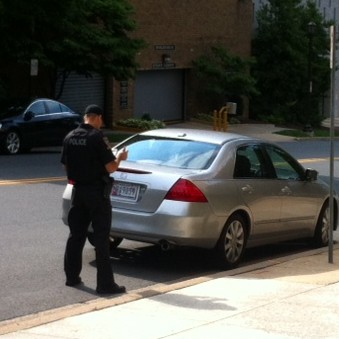
 The famous security guard statue at the intersection of South Park Avenue and The Hills Plaza is getting some company this summer—in the form of uniformed police officers from the Montgomery County Police Department.
As part of the Maryland “Click It or Ticket” campaign, residents may notice police officers standing outside their parked patrol vehicles—especially at the intersection of South Park Avenue and The Hills Plaza in Chevy Chase, where officers have established a checkpoint several weeks in a row. Police officers are monitoring passing vehicles for seat belt use and are conducting traffic stops when they spot violations.
Montgomery County police officers are targeting certain intersections for approximately two hours at a time. In Chevy Chase, officers say they prefer the intersection near the 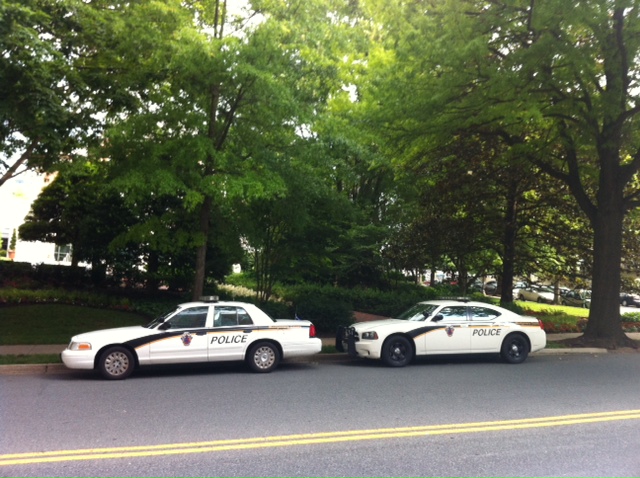 the security guard statue because it offers clear lines of sight for seeing if drivers are
wearing their seat belts, and vehicles are traveling at slower speeds than on larger roads, such as Wisconsin Avenue.
According to Charles County, MD’s traffic website, seat belt fines are $25 but can be more if minors in the vehicle are not buckled in. Throughout May and June, Maryland law enforcement officers will be aggressively enforcing Maryland’s seat belt laws.
Todd Jasper is a federal emergency manager and has been happy to call Chevy Chase home since 2008. His emergency management blog is www.toddjasper.com.
20 Sunday May 2012
Posted in EMERGENCY MANAGEMENT
Many companies and even Federal agencies have identified volunteers on every floor of their buildings to act as “floor wardens” during a fire alarm. One agency has instructions on their website to their floor wardens about their duties during a fire alarm:
The floor warden team is responsible for checking where the fire activation is, checking with other floor wardens that the building is empty, and liaising with the Fire Department. A member of the team will also record the event and investigate if necessary.
This conduct is common for floor wardens. They are expected to perform a search for people, investigate the source of fire, urge people to evacuate that haven’t left their desks, and rescue those that are trapped.
What equipment do they have? A reflective vest, flashlight, and perhaps a whistle!
What training do they have? They are shown the location of the stairwells, told where outside they should send people, and are instructed to write down the names of people that refuse to evacuate.
In my opinion, the floor warden system is seriously flawed and extremely dangerous. There are so many issues with the system, it’s hard to know where to start.
First, it’s hard enough for the professional rescue squad that the fire department sends to perform 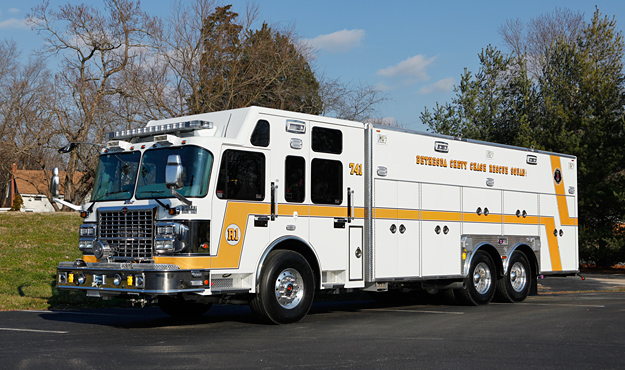 search and rescue–and rescue squads have extensive training and equipment (such as air supply, tools, radios, helmets, fire resistent person protective equipment, and other specialized equipment). Floor wardens have none of this equipment or training.
Additionally, rescue squads function as a team of professionals and have an ability to relay information up the chain of command. A rescue squad can receive an order from the chief to abort a rescue and regroup in safety. The floor wardens usually operate alone (rarely in pairs) and are lucky to even have a radio.
The idea that floor wardens are supposed to investigate a fire is absolutely ludicrous. If a fire department announced that, in order to save money, when it receives a call for fire, the fire department would first dispatch a civilian with no fire training and no personal protective equipment to enter the burning building and investigate, the community would be rightfully outraged. Yet that same mission is given to floor wardens when the fire alarm sounds.
In addition to a lack of equipment and woefully inadequate training, the liability of the floor warden system is absolutely extraordinary. Let’s take a step back and analyze their roles: when the fire alarm sounds, the floor wardens are instructed by their bosses NOT TO EVACUATE. OSHA requires that employees operating in an environment with smoke and/or fire have proper personal protective equipment (PPE) such as respiratory protection, eye protection, helmets, and fire retardent clothing. Fire doubles in size about every 30 seconds–and unequipped floor wardens are sitting ducks. Operating on the fireground without proper PPE is not just dangerous, but really foolish and comes with incredible liability for a company that orders some employees to stay put during a fire.
Additionally, the International Fire Code is very clear:
23.11.401.9 International Fire Code Section – Evacuation required. In the event of activation of a fire, emergency alarm, or at the direction of the fire code official, occupants of the building or portion of the building in which the alarm is activated shall make a safe and orderly evacuation out of the building
Notice that the IFC doesn’t say “let your volunteers wander around the fire without protective equipment or extensive fire training on the lookout for folks who refuse to evacuate.”
It shouldn’t require that a floor warden perish in a fire before the emergency management field examines this practice and then prohibits it.
Unfortunately, it seems like floor wardens are supposed to be a stop-gap measure for poor emergency training among office workers. Why force everyone to undergo annual evacuation and emergency procedures training when the floor warden will just tell me what to do during an emergency? This is not the right perspective. Everyone ought to go through annual and refresher emergency training under the expectation that NO ONE will be available to remind them what to do during the emergency.
In many ways, the floor warden system establishes unreasonable expectations. For the sake of argument, let’s say that floor wardens were properly equipped and trained and worked in teams–what happens when they call in sick or go on vacation or go to lunch? Floor wardens themselves may have unrealistic–and dangerous–expectations of performing lifesaving rescues and braving the flames to help others. We ought to squash fantasies of tombstone heroism (heroic acts that end in a tombstone epitaph) and instead provide realistic and pragmatic duties (such as accountability at the evacuation rendezvous/rally point or triage outside the building). None of the pragmatic duties I mention entail people staying inside a building after the fire alarm sounds.
Some folks point out that floor wardens are useful for holding the door open to the stairwell during evacuations. The problem here is that in most buildings, during a fire alarm, the stairwells are positively pressurized to keep smoke from filling the stairwell like a chimney. If each floor warden were to hold open the doors on each floor throughout an evacuation, the positive pressurization would fail to be effective. Thus, it’s actually best if the wardens do not hold the doors open!
Others say that studies have shown that people respond better to people in authority during an evacuation–thus the need for floor wardens with vests. That’s true, but studies have also shown that “evacuees are more likely to follow the instructions of uniformed officials (e.g., police and firefighters) than subway workers [or other non-public safety personnel], due to their perceptions of the authority and confidence of the firefighters and police officers.” If firefighters are proven to be even more successful at getting folks to evacuate, then why waste the effort with ineffective floor wardens?
The Community Emergency Response Team (CERT) training program does a good job of explaining two key principles of emergency response: “Do the greatest good for the greatest number” and “Don’t bring another victim to the scene” (meaning yourself). Floor wardens should be repurposed to do the greatest good for the greatest number that evacuate outside. Too, floor wardens can avoid bringing another victim to the scene by evacuating with everyone else when the fire alarm sounds.
In the end, I hope that building management companies, businesses, and agencies and organizations of all types abandon the floor warden system before someone gets seriously injured or killed. The myths that serve as justification to maintain the program are easily disproven and there’s no use keeping the program as a tradition when it has the potential of terrible legal liability and the potential for injury/death.
 toddjasper