• About Todd
  • Best of the Blog
  • Memes
  • Reading List
  • Todd’s Publications

toddjasper

~ Amat victoria curam

toddjasper

Monthly Archives: February 2012

EM Defined: Incident vs Event

25 Saturday Feb 2012

Posted by toddjasper in EMERGENCY MANAGEMENT

≈ 1 Comment

In emergency management, we frequently use the word “event”–and we’re almost always wrong.

It might seem silly, but there is a difference between incidents and events…and it’s often misunderstood or ignored. Below are three examples of the use of the word “event”:

  • “The lessons we have learned from such catastrophic events as the attacks of September 11, 2001, and Hurricane Katrina in 2005 demonstrate…”
  • “These assessments are conducted in counties affected by the disaster event [which was an earthquake]”
  • “The mission of the Federal Emergency Management Agency’s (FEMA) National Special Security Event (NSSE)…”

Can you guess which sentence correctly uses the word “event”?

Hint: it has NOTHING to do with a disaster…

To improve understanding, I’ve created the simple graphic below with the NIMS definition and examples of an event:
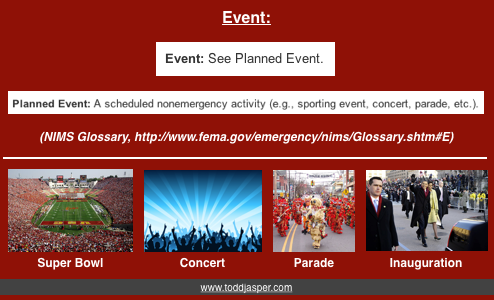
The DHS Lexicon also defines event as: “a planned, non-emergency activity occurring in a particular place during a particular interval of time.” (DHS, Lexicon: Terms and Definitions, October 23, 2007, p. 10).

It turns out that events are scheduled and they are NOT EMERGENCIES. The confusion might stem from emergency managers with military experience since the Department of Defense Dictionary of Military and Related Terms, 2007 defines “catastrophic event” as: “Any natural or man-made incident, including terrorism, which results in extraordinary levels of mass casualties, damage, or disruption severely affecting the population, infrastructure, environment, economy, national morale, and/or government functions.”

While the military definition of a “catastrophic event” quickly defers to the definition of an incident, it still harms our collective competency as emergency managers. As emergency managers, a major part of our job is to improve preparedness/readiness through training and consistent application of best practices. Therefore, if we aren’t using jargon or industry terms properly, we’re doing a disservice to ourselves and our field.

While “event” has nothing to do with emergencies, incidents have everything to do with emergencies:
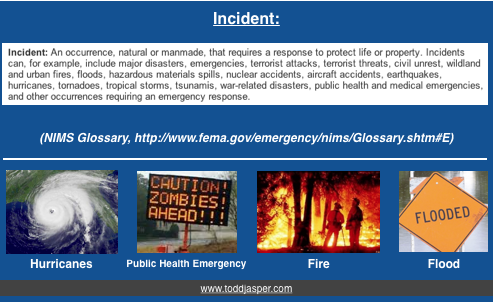
Now, just because an event is planned doesn’t mean it doesn’t require some of the very same resources as an incident. For example, few wildfires receive as many resources as the inauguration of the President of the United States of America. As emergency managers, we spend a lot of time preventing events from turning into incidents (like planning and positioning of resources so that fans from a sports game [event] do not start a riot [an incident]). While events can turn into incidents, incidents really can’t become events.

Hope this was helpful! In a future post, I’ll address what “verbiage” really means…

Share this:

  • Email a link to a friend (Opens in new window) Email
  • Share on X (Opens in new window) X
  • Share on Facebook (Opens in new window) Facebook
  • Share on Pinterest (Opens in new window) Pinterest
  • Share on Reddit (Opens in new window) Reddit
Like Loading...

EM Defined: Preparedness vs. Readiness

19 Sunday Feb 2012

Posted by toddjasper in EMERGENCY MANAGEMENT, HOMELAND SECURITY, PREPAREDNESS

≈ Leave a comment

Trying to define preparedness or readiness can be a frustrating task. It turns out that while there are many definitions, most skirt the task of actually providing a useful definition. For example, Webster’s dictionary defines preparedness as “the quality or state of being prepared” (prepared is defined as “subjected to a special process or treatment”). Poor definition leads to poor comprehension, which impedes our collective ability to improve preparedness.

In fact, when PricewaterhouseCoopers’ Health Research Institute (HRI) polled industry leaders in 2007 to define preparedness, “they agreed on only two things: (1) there is currently no universally accepted definition of preparedness; and (2) we must continue getting ‘better prepared.’” 

The DHS Lexicon (2007) defined preparedness as “activities necessary to build, sustain, and improve readiness capabilities to prevent, protect against, respond to, and recover from natural or man-made incidents.” Note that this definition mentions readiness. There’s a lot of confusion regarding preparedness and readiness. In fact, the now defunct Homeland Security Presidential Directive (HSPD)-8, explains that “The term ‘preparedness’ refers to the existence of plans, procedures, policies, training, and equipment necessary at the Federal, State, and local level to maximize the ability to prevent, respond to, and recover from major events. The term ‘readiness’ is used interchangeably with preparedness.”

While the DHS Lexicon equates readiness with preparedness, I have a different perspective. In my opinion, preparedness is the sum of plans, policy, procedures, protocols, risk/hazard/threat/vulnerability identification/analysis, and development of training curriculum for incident response/recovery. In my opinion, readiness is somewhat different. Readiness is the capability of successfully responding or conducting recovery operations (in other words, the ability to implement processes, procedures, etc included in preparedness).

For example, police officers don’t have much preparedness on a normal patrol (a police car equipped with a shotgun and some flares) but police officers maintain a high degree of readiness (in the sense that they are able to respond quickly, understand how to order additional resources, and are generally well-trained). Developing the training is preparedness but ensuring that everyone is trained and able to execute their function is readiness.

While the differences between the two concepts might seem slight, both concepts are crucially important to ensuring a proper balance between theory and practice in maintaining successful and progressive emergency management programs.


Share this:

  • Email a link to a friend (Opens in new window) Email
  • Share on X (Opens in new window) X
  • Share on Facebook (Opens in new window) Facebook
  • Share on Pinterest (Opens in new window) Pinterest
  • Share on Reddit (Opens in new window) Reddit
Like Loading...

Link

My Interview on Mitigation Journal

18 Saturday Feb 2012

Posted by toddjasper in EMERGENCY MANAGEMENT

≈ Leave a comment

Recently I had the pleasure of being interviewed by Mr. Rick Russotti–famous for his Mitigation Journal Blog. The interview is about 30 minutes and is available here. We covered a lot of great topics, it might be worth a listen!

Share this:

  • Email a link to a friend (Opens in new window) Email
  • Share on X (Opens in new window) X
  • Share on Facebook (Opens in new window) Facebook
  • Share on Pinterest (Opens in new window) Pinterest
  • Share on Reddit (Opens in new window) Reddit
Like Loading...

Emergency Manager: “What People Think I Do / What I Really Do” Meme

15 Wednesday Feb 2012

Posted by toddjasper in EMERGENCY MANAGEMENT

≈ 3 Comments


Emergency manager memeI’ve seen this meme a lot recently and thought it might be fun to make one for emergency managers!

For clarity, the “what my family thinks I do” is a guy on a segway handing out water bottles… and the “what I actually do” pic is from the famous cowboys herding cats video.

Share this:

  • Email a link to a friend (Opens in new window) Email
  • Share on X (Opens in new window) X
  • Share on Facebook (Opens in new window) Facebook
  • Share on Pinterest (Opens in new window) Pinterest
  • Share on Reddit (Opens in new window) Reddit
Like Loading...

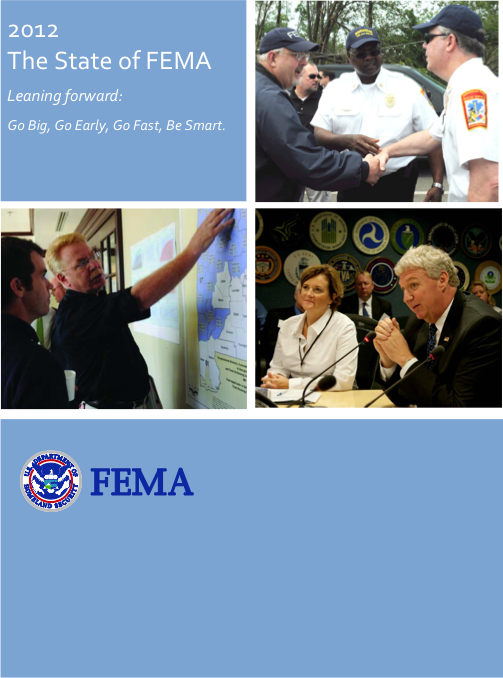
The State of FEMA: Leaning Forward: Go Big, Go Early, Go Fast, Be Smart

14 Tuesday Feb 2012

Posted by toddjasper in EMERGENCY MANAGEMENT

≈ Leave a comment

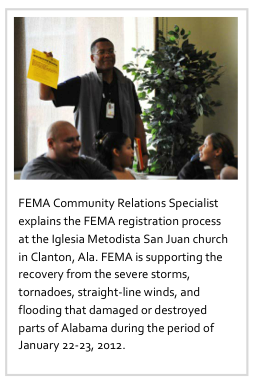
Today FEMA released “The State of FEMA” as an overview of FEMA’s vision and strategy (with a lot of Whole Community approach). It’s a smart idea, especially since (as the report quickly mentions) FEMA responded to more disasters in 2011 than ever before (98 major disaster declarations, 26 emergency declarations, and 112 fire management assistance grant (FMAG) declarations). There’s no doubt FEMA has been undergoing a profound transformation under Mr. Fugate and it’s pretty impressive. Among all else, Mr. Fugate has transitioned FEMA from a federal response to a NATIONAL response (with national planning/preparedness and prevention/protection efforts now in full swing).

Highlights include

  • National Disaster Recovery Framework (NDFR) released
  • National Mass Care Strategy developed
  • FEMA Qualification System implementation
  • Establishment of Presidential Policy Directive (PPD)-8 Program Executive Office (PEO)
  • FEMA helped train more than 428,000 individuals as part of the Community Emergency Response Teams (CERT) program. Overall, more than 1.3 million CERT volunteer hours were recorded in 2011
  • Emergency Alert System was tested nationally for the first time

The document even provides explanation of FEMA’s guiding principles, the FEMA culture, and strategic priorities (particularly impressive when the document routinely makes statements like “In 2012, FEMA will…”). It’s rare in government to see such assertive (or as FEMA and MSNBC puts it “forward leaning”) statements.

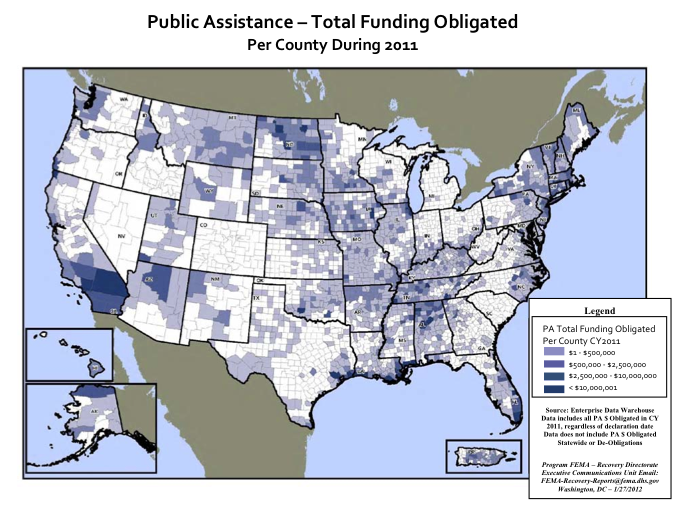
More than ever before, FEMA is emphasizing comprehensive emergency management that includes community members. The document pretty much mentions community engagement efforts on every page. But it’s not just anecdotes, FEMA uses hard data to explain the amount of funding and response efforts across the nation (see map below). The document provides data about training, program implementation, and even mitigation and IPAWS.

This document does an excellent job of explaining what FEMA is doing, how it is doing it, what the results have been, and exactly what FEMA plans to do in 2012. The military talks about transformation quite a bit, but I couldn’t be more impressed by the transformation occurring at FEMA–especially during a year with the most disasters on record. It’s an extraordinary time at FEMA now and I have no doubt it’s to the benefit of Americans now, but also for future generations.

Share this:

  • Email a link to a friend (Opens in new window) Email
  • Share on X (Opens in new window) X
  • Share on Facebook (Opens in new window) Facebook
  • Share on Pinterest (Opens in new window) Pinterest
  • Share on Reddit (Opens in new window) Reddit
Like Loading...

Relocation After Evacuation: The Danger of Outdoor Evacuation

11 Saturday Feb 2012

Posted by toddjasper in CAMPUS SAFETY, SECURITY, & PREPAREDNESS, EMERGENCY MANAGEMENT, PREPAREDNESS, RESPONSE

≈ Leave a comment


I frequently teach emergency management classes/trainings and the topic of evacuations comes up a lot. Even when I teach emergency managers, I’m often surprised by how few understand the concept. The objective of evacuation is to relocate to a place of greater-known safety (ideally to a location that permits continued sheltering-in-place).

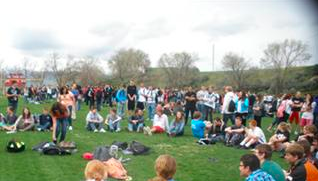
Most folks think of evacuation as just getting out of dodge. Essentially, we have quite an elementary mindset of evacuation. Literally elementary. The standard we seem to have adopted is that we all simply file through the exits and make our way outside. Seemingly, that’s when most emergency management plans end. Fortunately, that is not when our duty as emergency managers ends.

Just like the captain of a ship, the duties of an emergency manager don’t end once we leave the building. Our duty extends until the folks we serve are safe (and that is not synonymous with outdoors!)

Of course, we recognize that sending folks outside isn’t always the safest course of action (if that were the case, we would just always evacuate). For instance, if we suspected that there were anthrax in the air outside, we wouldn’t evacuate outdoors. Similarly, if there were evidence of HAZMAT outdoors, we would shelter-in-place rather than evacuate.


Too frequently we neglect to consider the effects of outdoor evacuation posed by inclement weather, potential for secondary attack/sniper, damages/injuries caused by secondary improvised explosive devices (IED) intended for responders/evacuees, and lack of accommodations for those with functional/access needs as well as those with medical issues.

For example, in 1998, two students activated the fire alarm at a middle school and took up shooting positions around the outdoor field. The result was the Westside Middle School massacre with five people killed. In 1974, five people were killed and 11 injured when a student in New York fired on his classmates as they evacuated Olean High School.

I propose an evacuation decision-making process that begins with notification of a hazard and concludes with a rapid assessment to relocate to an alternative indoor location or return quickly indoors to the primary location. You’ll notice that evacuation is the HALFWAY point of the process, not the terminal activity. It is vitally important for emergency managers to understand that safety is not intrinsically linked with the outdoors.

Indeed, when folks have evacuated outdoors, there are many safety and security concerns present. For individuals with medical conditions, will they be able to take medication outdoors? What if they require privacy, drinking water, or a sharps container? Is there perimeter security for an outdoor evacuations (also known as “force protection”)? If the weather is severely cold, is ice accumulation a hazard? Is there the threat of frostbite? During severely hot weather, individuals outside for extended periods of time may become victims of heatstroke, dehydration, and other medical problems associated with exposure. When individuals are forced to evacuate and stand outdoors for extended periods of time, the potential for secondary medical emergencies and abandonment (the act of one or more individuals abandoning the evacuation effort) increases.

During an evacuation, discipline and accountability are crucial. Poor communication, inconsiderate attitudes towards those with special needs, and discomfort due to environmental conditions are all issues that plague evacuations and can lead to discord among the evacuated masses. As emergency managers, we must recognize that an outdoor evacuation should be planned to be as rapid as possible. If immediate return to the affected building is impossible, emergency managers must have a plan to immediately relocate personnel to an indoor evacuation rendezvous point. 

Hopefully, if we rebel against an “elementary” mindset of evacuation and plan for immediate relocation after evacuation, we’ll reduce the collective risk of injury or death due to outdoor safety/security concerns.

Share this:

  • Email a link to a friend (Opens in new window) Email
  • Share on X (Opens in new window) X
  • Share on Facebook (Opens in new window) Facebook
  • Share on Pinterest (Opens in new window) Pinterest
  • Share on Reddit (Opens in new window) Reddit
Like Loading...

My ICS Wedding Plan

04 Saturday Feb 2012

Posted by toddjasper in EMERGENCY MANAGEMENT

≈ 4 Comments

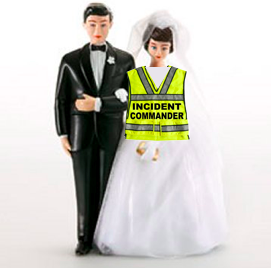
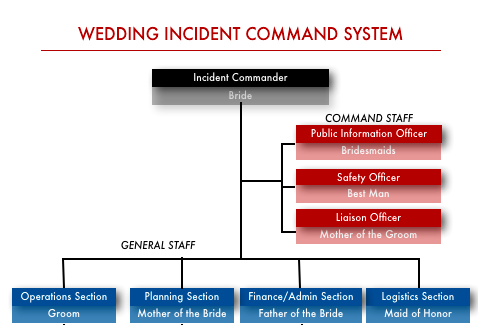
I’ve been a professional planner since 2005 for emergencies, continuity of operations, and strategic recovery plans. When I got engaged last December, I knew wedding planning would be a new frontier. As I’m starting the wedding planning process, I can’t help but notice how ICS is applicable to many of the roles and responsibilities. Just for kicks, I developed the ICS chart below…

I’m sure there are many other slots that could be activated (lodging, food unit, etc). Just goes to show how ICS is truly scalable and flexible.

Share this:

  • Email a link to a friend (Opens in new window) Email
  • Share on X (Opens in new window) X
  • Share on Facebook (Opens in new window) Facebook
  • Share on Pinterest (Opens in new window) Pinterest
  • Share on Reddit (Opens in new window) Reddit
Like Loading...

Chevy Chase Patch Article: When to Call 911

03 Friday Feb 2012

Posted by toddjasper in EMERGENCY MANAGEMENT

≈ Leave a comment

Tags

bystander effect, diffusion of responsibility, emergency preparedness, kitty genovese

Every month I have an emergency preparedness article in the local newspaper (ChevyChase.Patch.com). Here’s the link to February’s article. I’ve also copied it below:

On March 11, 2011, employees at the Apple store in Bethesda heard screams for help and sounds of a fight but did nothing.

The next day, Apple employees were shocked to discover police officers investigating a murder that occurred next-door at the Lululemon store. At sentencing for the murderer last month, Montgomery County Judge Robert A. Greenberg delivered an impassioned speech that included mention of the Apple store employees: “the callous indifference of those Apple store employees,” Greenberg said.“They did not do a blessed thing.” The best and easiest thing would have been for witnesses to call 911.

Unfortunately, societal indifference is more common than we would hope. In October 2011, a toddler in China was repeatedly hit by traffic on a busy street. More than 18 people witnessed the accident without rendering aid or calling for help. This calloused behavior is referred to by psychologists as “bystander effect.”

The most famous example of “bystander effect” in the United States was the stabbing murder of Kitty Genovese in March 1964 in Queens, NY. More than a dozen people heard Genovese’s screams, yet there were not a dozen calls for help. Psychologists have noticed a trend of “diffusion of responsibility” in crowds or groups when an emergency occurs, yet no one acts. Inaction in a crowd is contagious and provides justification to others in the crowd that action is not needed. The U.S. military noticed this unfortunate trend as well; the military even developed “bystander training” to fight against witness inaction.

To insulate ourselves from diffusion of responsibility or bystander effect/indifference, each of us needs to be cognizant of when it is appropriate to call for help. We may not be required to involve ourselves in dangerous situations, but with the constant police presence in Chevy Chase, help is always a call away.

Montgomery County Police Sgt. Jennifer McNeal explains that the public should not feel they are inconveniencing law enforcement by calling 911 for suspicious circumstances.

“It’s our job,” said McNeal, “to make sure people are safe.” McNeal recommends that citizens call 911 immediately if they see a crime being committed or “if you see someone needs help or hear anything that requires police investigation, such as a gunshot, screams, sounds of a struggle or if something catches your eye as out of ordinary, please call 911 so that we can investigate,” McNeal explains.

In fact, police departments in the area have taken part in the “If You See Something, Say Something!” campaign to encourage citizens to report emergencies, suspicious behavior, unattended bags or other events/activities that authorities should investigate.

Below are the phone numbers and other methods for contacting local police departments in the Chevy Chase area. (You may wish to store them in your phone’s memory.)

Chevy Chase Police Department
EMERGENCY: 911
Non-emergency: 301-654-7300

Montgomery County Police, District 2 (Bethesda/Chevy Chase)
EMERGENCY: 911
Non-emergency:

  • 301-652-9200
  • Text “MCPD” to 274637
  • Submit a web tip

Maryland-National Capital Region Park Police
EMERGENCY: 301-949-3010
Non-emergency: 301-949-8010

Metro-Transit Police
EMERGENCY: 202-962-2121

Remember, if you encounter anything suspicious, call 911. As a community, we all have a moral imperative to help one another in a time of need, even if it just means dialing 911.

Share this:

  • Email a link to a friend (Opens in new window) Email
  • Share on X (Opens in new window) X
  • Share on Facebook (Opens in new window) Facebook
  • Share on Pinterest (Opens in new window) Pinterest
  • Share on Reddit (Opens in new window) Reddit
Like Loading...

Avoiding the Fate of Napoleon (Arkansas): Designing Successful Recovery Efforts

01 Wednesday Feb 2012

Posted by toddjasper in PREPAREDNESS, RECOVERY

≈ Leave a comment

Tags

Arkansas, ESF-14, FEMA, long-term community recovery, LTCR, Napoleon, national disaster recovery framework, NDRF, recovery, whole community

I spent yesterday in Harrisburg, PA at the Region III National Disaster Recovery Framework (NDRF) Stakeholder Engagement Workshop. While it was great to see so many emergency management professionals dedicated to recovery, it was also quite clear that these types of discussions about recovery are just the beginning of crucial recovery planning at every level. Collectively, we’ve spent enormous resources on response and now, with the NDRF, our focus is being re-adjusted to better understanding–and planning–recovery.

In 1884, a flood inundated the town of Napoleon, Arkansas. The flood occurred before the Stafford Act, no significant recovery operations were implemented, and the town never recovered. In fact, they say during low tide you can still see remnants of Napoleon in the sandbars of the Mississippi River near where the town originally stood. The fate of Napoleon, Arkansas is a symbol of failed recovery.

As our capabilities, technology, and institutions of government have matured, the processes for federal assistance for disaster relief and recovery were codified and they seemed to work well. Hurricane Camille, the 1993 “Storm of the Century”, the 1972 Rapid City Flood (which claimed 238 lives), and the Northridge Earthquake all received disaster declarations and required major disaster relief by the United States Federal government.

The prolonged suffering after Hurricane Katrina re-enforced the moral imperative of well-designed recovery–at every level. Katrina was the catalyst for the entire emergency management industry to re-examine and redefine recovery. It’s taken years but we are now advancing new concepts and completely new schools of thought regarding recovery. ESF-14 Long-Term Community Recovery (LTCR) was the first formal promulgation of strategy for implementing untraditional methods of recovery.

LTCR is a community-driven post-disaster planning process that articulates ideas and priorities expressed by the community for recovery. The LTCR process relies on community consensus as a feedback loop to innovative community development and strategic application of grants and governmental programs. The following plans are examples of the LTCR planning process:

  • Chambers County, Texas (2009)
  • Gays Mills, Wisconsin (2008)
  • Charlotte County, Florida (2004)

While LTCR is emblematic of the Whole Community approach, is still a very reactive process. NDRF takes most of the principles of LTCR and shapes the implementation of those principles into a recovery continuum. The NDRF encourages proactive, pre-disaster planning at all levels of government.

By proffering recovery support functions, the NDRF formalizes recovery lines of operation, such as:

  • Community Planning and Capacity Building
  • Economic
  • Health and Social Services
  • Housing
  • Infrastructure Systems
  • Natural and Cultural Resources

While the annexes for each of the RSFs are in the works, there is still an enormous amount of effort needed to develop pre-disaster recovery plans at all levels of government and community development. In order to avoid future Napoleons, we must prepare for a meticulously well-designed recovery.

Share this:

  • Email a link to a friend (Opens in new window) Email
  • Share on X (Opens in new window) X
  • Share on Facebook (Opens in new window) Facebook
  • Share on Pinterest (Opens in new window) Pinterest
  • Share on Reddit (Opens in new window) Reddit
Like Loading...

Enter your email address to follow this blog and receive notifications of new posts by email.

Join 49 other subscribers

Recent Posts

  • Todd’s Interview: “Questions Raised about Police Response in Capitol Shooting”
  • Todd’s NPR Interview on Tragic Navy Yard Mass Shooting
  • 5 Reasons Your Agency Should Have a Smartphone App
  • FEMA Releases Revised Federal Continuity Directive 2 (FCD-2)
  • Intro to IAEM Emerging Technologies Caucus (ETC)

Todd’s Tweets

Tweets by toddjasper

Categories

  • #SMEM
  • ABOUT TODD
  • CAMPUS SAFETY, SECURITY, & PREPAREDNESS
  • CONTINUITY OF OPERATIONS
  • EMERGENCY MANAGEMENT
  • EMERGENCY NOTIFICATION
  • HOMELAND SECURITY
  • PREPAREDNESS
  • PUBLIC HEALTH
  • RECOVERY
  • RESPONSE

Blog at WordPress.com.

  • Subscribe Subscribed
    • toddjasper
    • Join 49 other subscribers
    • Already have a WordPress.com account? Log in now.
    • toddjasper
    • Subscribe Subscribed
    • Sign up
    • Log in
    • Report this content
    • View site in Reader
    • Manage subscriptions
    • Collapse this bar

Loading Comments...

    %d